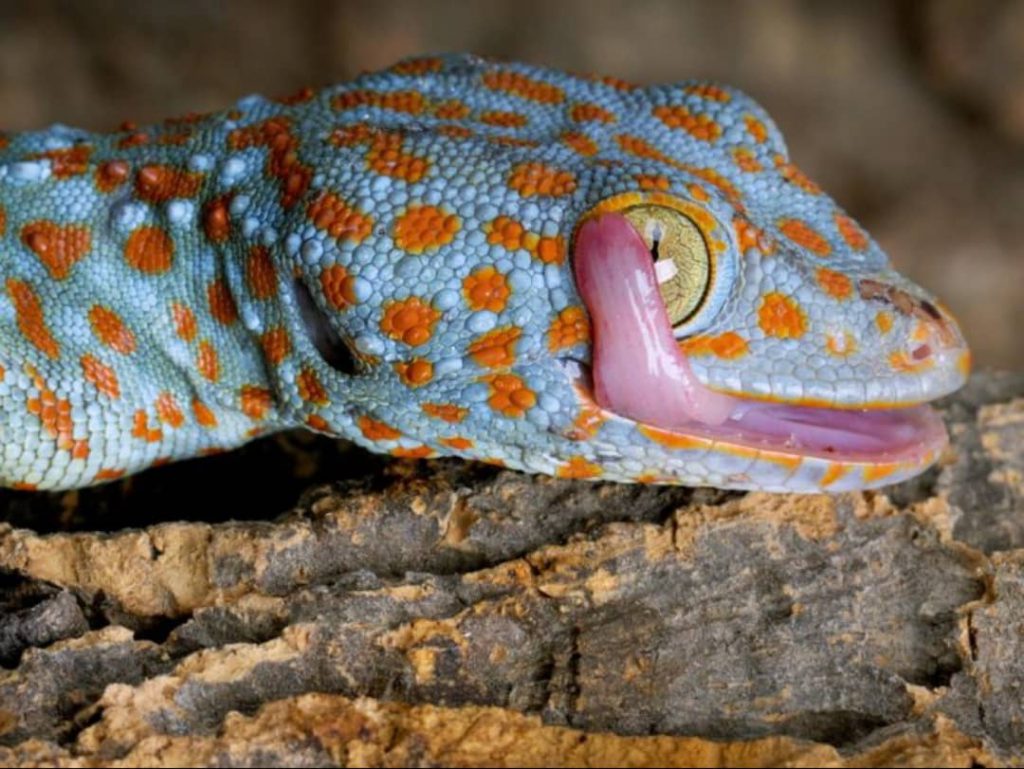
Different gecko species require different levels of care. Geckos typically require a 10-20 gallon aquarium, and can stray from their heat source in too large a space. The aquarium should have a screen lid to provide adequate ventilation and support the light fixture.
It is best to heat one end of the cage, so the geckos have a temperature gradient to choose from. Your geckos should be provided with insects for food, and vitamins to maintain their health.
Behavior of the Gecko
Geckos are active at night, though there are species that forage during the day. Geckos are incredibly vocal reptiles, and will frequently make chirping, clicking, or barking sounds. These noises can be used to establish territory or search for a mate.
Reproduction of the Gecko
After mating, female geckos lay eggs in dark, damp locations, where they seem to prefer leaves and bark as substrate for their nests. Most species lay just one clutch of eggs per year, but some species can reproduce more frequently.
Beliefs, Superstitions, and Phobias About the Gecko
In Costa Rican cultures, geckos are considered a symbol of good luck. The basis of this belief is in logical thought rather than superstition, as a gecko-free home may have been treated heavily with toxic pesticides. In Costa Rica, a hotel room without a gecko companion is considered bad luck!
Geckos need a home that will suit the size they will grow into, and that suits their particular species. Begin by researching the type of gecko you want. Once you have decided, you will be able to pick out a proper tank; something with enough room for your gecko to grow and have plenty of space to move about in.
Once you have chosen the right sized tank, you will want to fill it with hiding places, such as boxes with a hole cut in the side. Geckos also like having a good, moist substrate (floor covering) to rest on. Your gecko will be content with both real and fake plants, so do a little of both, and leave room for a pieces of driftwood for your gecko to play on and use as cover (for the times it wants to be alone).
The tank will need to be kept at a certain temperature and humidity, with the right amount of light for the particular species. There are specially made lamps and bulbs that can do both warming and lighting, but you will need to take care to position the lamp so that your gecko is not too close to the heat, and you will need to set a light schedule so that your gecko also has sleep time. If you are in a dry climate, a humidifier placed close to the tank will help to create a moist environment for your little reptilian friend.